
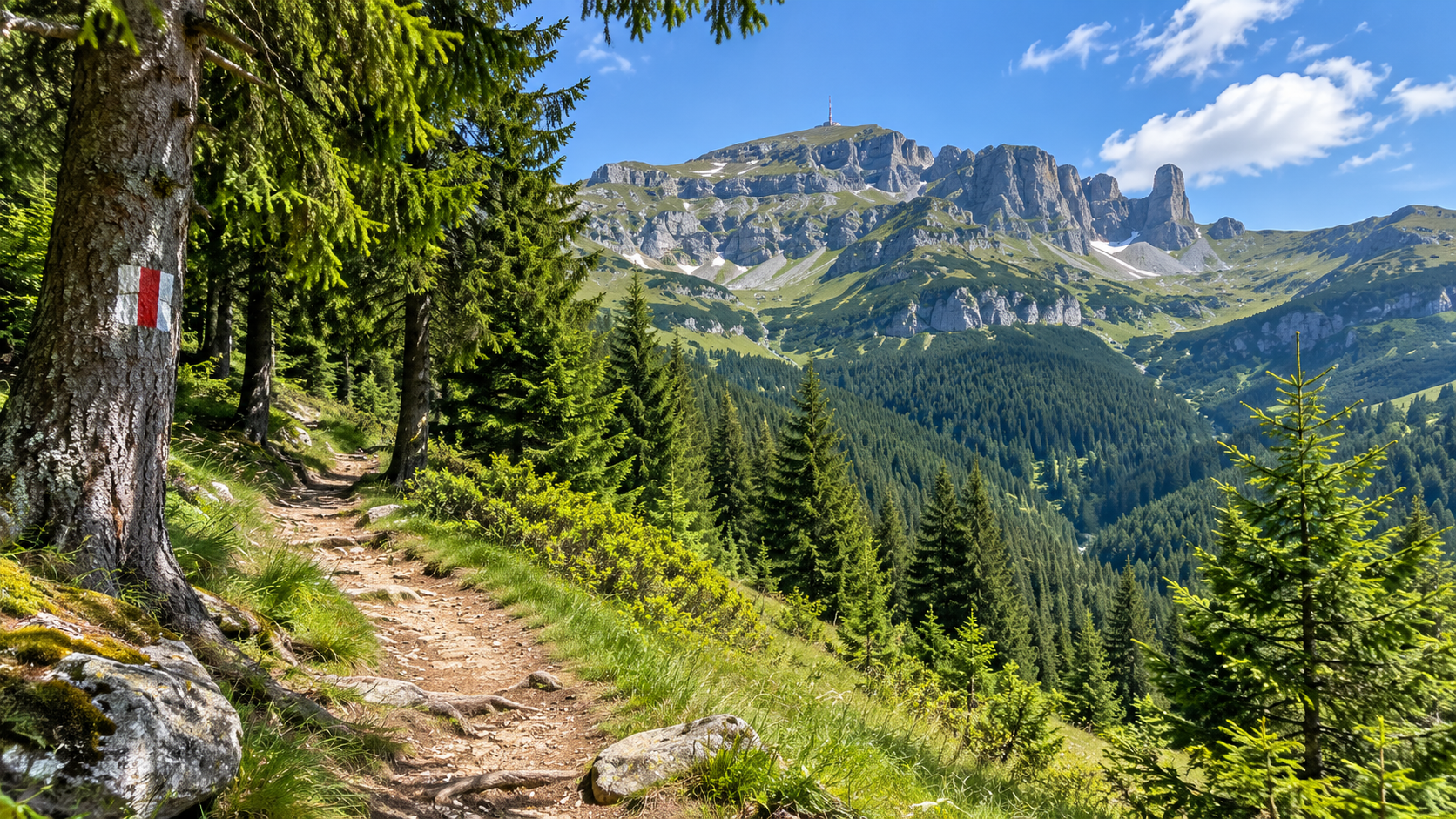
The Carpathians are too varied to choose a walking base by name alone. A town with a railway station, a village beneath a limestone ridge, and a resort close to a plateau produce different days outdoors. Before choosing accommodation, decide what you want the walk to feel like: a forest outing with a clear return, a longer day gaining height, or a demanding mountain route that needs specialist preparation.
This guide compares three starting ideas around the southern Carpathian arc: Brașov for a mixed city-and-walking stay, Zărnești for the Piatra Craiului landscape, and the Prahova Valley towns of Sinaia and Bușteni for access toward the Bucegi. For the trail itself, use current official route information, a proper map, and advice appropriate to the actual conditions. The choice of base is the first decision; the choice of route is a separate one.
Brașov: the flexible base
Brașov is a practical choice when walking is one element of the trip rather than its entire purpose. The old center has enough interest for a day when the weather discourages a longer outing, and Tâmpa rises directly behind it. That close relationship between town and slope lets you keep a shorter outdoor plan without sacrificing the rest of the day.
Choose this base if you want a city meal and a familiar evening after time outside. It also suits a companion group with different interests: one person may prefer architecture while another wants a walk. A more ambitious mountain day can still require a separate transfer, so compare a central address with the actual starting point before booking.
Keep the distinction between a town walk and a mountain route clear. A path visible from a square can still be steep, muddy, or affected by winter conditions. Decide on the day's destination and return before setting out, rather than continuing upward because the next viewpoint looks close.
Zărnești: beneath Piatra Craiului
Zărnești provides an approach to the Piatra Craiului area, where forest, gorges, meadows, and a pronounced limestone ridge create sharply different kinds of terrain. The route through Prăpăstiile Zărneștilor offers a way to experience the gorge landscape without treating the high ridge as the inevitable goal. A visit to the national park's information facilities can help place the day's route in context.
Do not choose a ridge itinerary simply because it is the most dramatic line in a photograph. The park's own information distinguishes physically demanding routes toward the crest from lower outings. Exposure, rock, sustained ascent, and weather can make two routes in the same area entirely different undertakings. A lower walk is a complete mountain day when it matches the group's abilities and conditions.
This base suits travelers who want the mountain landscape to organize the stay. Compare the location of accommodation with the actual trail approach: an address in the wider area may still need a road transfer. Arrange the return as carefully as the outward journey so that fatigue does not leave transport as the final problem of the day.
Sinaia and Bușteni: the valley and the Bucegi
Sinaia and Bușteni sit in the Prahova Valley and can fit naturally into a journey using the rail corridor between Bucharest and Brașov. They offer a different base from a remote village: the valley provides transport and services, while routes lead into the surrounding mountain terrain. Choose between them according to the specific outing and the kind of evening you want.
In the Bucegi area, a short forest route and a steep ascent toward the plateau should be considered on their own terms. The park's thematic route descriptions include outings around places such as Urlătoarea Waterfall and the route toward Babele, with markedly different demands. Read the current route classification in full and match it to your experience. A familiar place-name on a sign does not establish the difficulty of its approach.
Cable transport, where available, can change access but should not become the only plan for getting down. Wind, operating changes, queues, and weather may affect a service. Build the day around a route and return you understand, and make sure the group is prepared for the terrain beyond the arrival point.
Let the season choose the level of ambition
Mountain conditions can differ substantially from those in the valley. A warm afternoon in town does not establish the state of a higher path, and snow can persist where a city visitor is no longer thinking about winter. Short daylight, ice, storms, fog, and strong wind all change the practical meaning of a route description.
For an initial visit, keep at least one day flexible and choose a lower alternative in advance. That makes a weather change a planning decision rather than a disappointment. Winter walking and exposed high routes require skills and equipment beyond a casual sightseeing outing; seek qualified local guidance when the intended terrain exceeds your experience.
Before departure, consult current park and mountain-rescue information for the chosen area. Then make one clear route plan with a turnaround point and a return arrangement. Carry the navigation, clothing, water, food, and emergency supplies appropriate to that plan. Keep someone informed of where you intend to go.
A three-day stay with a useful rhythm
Use the arrival afternoon for a short local walk and orientation. Find the actual starting point for the next day's route, understand the transport, and make sure the group agrees on the level of effort. Put the main walking day in the middle, when you have a full day and can adapt to the forecast. Keep the departure morning modest rather than attempting a final summit before a train.
This rhythm is especially helpful on a wider Transylvanian rail journey. It avoids turning the mountains into a hurried excursion between city check-ins. If the group would rather concentrate on architecture, the Brașov and Saxon-town route offers a coherent alternative that still keeps the regional landscape in view.
Choose the base that supports the whole day
Pick Brașov when you want a mixed stay with a strong urban alternative. Pick Zărnești when the Piatra Craiului landscape is the main subject. Consider Sinaia or Bușteni when the Prahova Valley corridor and a specific Bucegi outing fit the wider journey. Then judge accommodation by the actual start, return, and evening needs of your route.
A successful mountain trip needs a route that suits the people walking it, enough time to enjoy the surroundings, and a return that remains comfortable when the day takes longer than expected. The summit may be part of that experience, but the quality of the whole day begins with a carefully chosen base.